
You are here
Feed aggregator
Ukraine Battles To Restore Power After Russian Attacks, Ahead Of Abu Dhabi Talks
Ukrainian authorities battled to restore power to hundreds of thousands of people in the east of the country following Russian air strikes, while officials said external power had been restored to the Zaporizhzhya nuclear plant, which is currently occupied by Russian forces.
Categories: Defence`s Feeds
Trump says renewed strikes on Iran "highly unlikely" if talks progress
U.S. President Donald Trump said Sunday that renewed military strikes on Iran were "highly unlikely" as long as negotiations made progress, but did not rule out further military actions.
Categories: Defence`s Feeds
Trump Says 'Very Unlikely' To Launch Fresh Iran Strikes If Talks Progress
US President Donald Trump said he is "highly unlikely" to launch fresh air strikes against Iran as long as progress is seen taking place in the peace process.
Categories: Defence`s Feeds
Explainer: Can Eisenkot form Israeli gov't after getting mandate?
Former Israeli military chief Gadi Eisenkot received a presidential mandate on Sunday to form a government, giving him the first opportunity to unseat Prime Minister Benjamin Netanyahu, Israel's longest-serving prime minister, after an October election stripped his right-wing coalition of a parliamentary majority.
Categories: Defence`s Feeds
New trends in international investment agreements: tracing the emergence of investment facilitation
The focus of investment treaty-making has shifted from protecting foreign investors towards investment facilitation. Investment facilitation refers to policies that ease investment without granting investors special rights or legal protection. This study provides a comprehensive mapping and comparison of investment facilitation provisions across international investment agreements (IIAs), and evaluates their level of legalisation using the Investment Facilitation Index (IFI). Of the 4,037 IIAs with available texts as of August 2026, 102 explicitly reference “investment facilitation”. A few agreements, such as the Investment Facilitation for Development Agreement (IFDA), the EU–Angola Sustainable Investment Facilitation Agreement (SIFA), the Economic Community of West African States (ECOWAS) Common Investment Code (CIC), the Brazilian cooperation and facilitation investment agreements (CFIAs) and the African Continental Free Trade Area (AfCFTA) Investment Protocol, stand out due to the breadth of measures they incorporate; these could serve as blueprints for future treaties. The data also suggest that although “normative” commitments are relatively well reflected in IIAs, notably on transparency and responsible business conduct, “functional” dimensions such as electronic governance and streamlined application processes remain under-represented. There is also a trade-off between breadth and bindingness: while, on average, almost 57 per cent of covered provisions are framed in mandatory terms, the most comprehensive treaties rely heavily on hortatory language, whereas narrower agreements often achieve higher levels of legalisation. Geopolitical tensions and rising economic security screening, however, limit multilateral buy-in and may constrain the effectiveness of investment facilitation. These findings could be helpful to policymakers and investment promotion agencies, who can gain an overview of existing investment facilitation measures and their bindingness in order to design treaties and reforms of national investment frameworks that turn commitments into effective outcomes.
Dr Rodrigo Polanco is a Titular Professor at the World Trade Institute (WTI), University of Bern and a legal adviser at the Swiss Institute of Comparative Law.
Categories: Diplomacy & Defense Think Tank News
Ebola : en RDC, dans le principal foyer épidémique, le lancement des premiers essais de traitements fait renaître l’espoir
A Bunia, dans l’est de la République démocratique du Congo, où l’épidémie frappe durement, des essais cliniques testant l’efficacité de plusieurs vaccins et médicaments sont actuellement menés. Leur but est de protéger les populations de la contamination et d’augmenter les chances de survie des malades.
Categories: Afrique
The EU’s budget talks raise serious questions for the UN
Europe’s current geopolitical agenda and calls for increasing the use of European organizations in delivering its international cooperation agenda suggest that the UN needs to prepare for a potentially major drop in its funding from the continent after 2027, so the UN’s time to react is now.
Categories: Diplomacy & Defense Think Tank News
Les nouveaux membres de l'APDP prêtent serment
Les huit membres de l'Autorité de protection des données à caractère personnel (APDP), ont prêté serment le vendredi 6 novembre 2026 au siège de la Cour suprême à Porto-Novo. L'audience solennelle a été présidée par Victor Dassi Adossou, président de la Cour suprême.
Nommés par le décret n° 2026-422 du 1er juillet 2026, Luciano Hounkponou, Denise Degbedji, Maixent Djeigo, Mama Salifou, Crépin Dodo, Axel Mathieu Foadey, Friggens Ajavon et Blaise Gilbert Isaac Kissezounon, tous membres de l'APDP, ont prêté serment le vendredi 6 novembre 2026, devant la Cour suprême.
La cérémonie officielle marquant leur prise de fonction a été présidée par Victor Dassi Adossou, président de la Cour suprême, assisté des autres membres de l'institution.
Devant la haute juridiction, les nouveaux responsables ont prêté serment de remplir leurs fonctions en toute indépendance et impartialité, avec dignité et loyauté. Ils se sont également engagés à respecter les obligations liées au secret des délibérations.
Dans son discours, le président de la Cour suprême a rappelé l'importance de cet engagement et la responsabilité qui leur incombe désormais. Il les a notamment invités à mesurer les enjeux humains, juridiques et institutionnels de leur mission, dans un environnement caractérisé par l'essor du numérique et l'augmentation constante des traitements de données personnelles.

Victor Dassi Adossou a souligné que la prestation de serment dépasse le cadre d'une simple formalité administrative. Selon lui, elle constitue un engagement juridique, moral et républicain envers la loi, les institutions et les citoyens. Il a également insisté sur la dimension humaine de la protection des données, rappelant que toute information personnelle renvoie à un individu dont les droits et les libertés doivent être préservés.
À l'issue de l'audience, la Cour suprême a pris acte du serment des huit membres et les a renvoyés à l'exercice de leurs fonctions.
Cette cérémonie consacre le démarrage officiel de leur mission au sein de l'Autorité de protection des données à caractère personnel.
À travers cette institution, le Bénin entend renforcer la protection des informations personnelles et garantir le respect de la vie privée, dans un contexte où les usages numériques prennent une place croissante dans les activités des citoyens, des administrations publiques et des entreprises.
F. A. A.
Categories: Afrique, Russia & CIS
Bio Tchané présente sa vision à l'ancien président Nicéphore Soglo
Le président du Conseil économique et social (CES), Abdoulaye Bio Tchané, a rendu visite, le samedi 7 novembre 2026, à l'ancien président de la République, Nicéphore Dieudonné Soglo. Il s'agissait d'une visite de courtoisie au cours de laquelle il a souhaité un bon retour à l'ex chef d'Etat après une longue période d'absence liée à des problèmes de santé.
Bio Tchané au domicile de Nicéphore Dieudonné Soglo. Samedi 7 novembre 2026, le président du CES a fait une visite de courtoisie à l'ancien président de la République. Au cours de cette la visite, Abdoulaye Bio Tchané s'est réjoui de retrouver l'ancien chef de l'État en parfaite santé. La rencontre a été l'occasion pour les deux personnalités d'échanger sur l'actualité institutionnelle et les perspectives de développement du Bénin.
Le président du CES a présenté à son hôte les principales orientations de son mandat à la tête de la huitième mandature, ainsi que les ambitions qu'il nourrit pour les cinq prochaines années. Il a notamment exposé sa vision d'une institution davantage engagée dans l'utilité publique, la proximité avec les citoyens, le dialogue interinstitutionnel et le rayonnement international, à travers les quatre piliers qui fondent son action.
Nicéphore Soglo a salué cette démarche et félicité le président du CES pour ses nouvelles responsabilités. Sûr de ses capacités à contribuer au renforcement et au rayonnement du Conseil économique et social, il lui a prodigué des conseils inspirés de sa longue expérience à la tête de l'État et de sa connaissance des institutions républicaines.
Revenant des travaux de l'Union des Conseils économiques et sociaux et institutions similaires francophones (UCESIF), organisés en Roumanie, Abdoulaye Bio Tchané s'était déjà rendu à l'hôpital pour prendre des nouvelles de l'ancien président et s'enquérir de l'évolution de son état de santé.
Par cette nouvelle visite, le président du CES inscrit sa démarche dans une logique de respect des anciens dirigeants et de reconnaissance de leur contribution à la vie politique et institutionnelle du Bénin.
F. A. A.
Categories: Afrique, Balkan News
Loto Fortune : Les résultats du tirage de 11 H
LES RÉSULTATS LOTO FORTUNE SONT LÀ !
TIRAGE N°179/26 Lundi 09 Novembre 2026 (11H)
79 • 56 • 10 • 08 • 20

Félicitations aux heureux gagnants !
Pas encore gagné ? Gardez le sourire !
Rendez-vous au prochain tirage de 14H pour une nouvelle chance.
Jouez dans les centres de jeux ou en ligne : Tapez 590# ou lnbloto.bj
Jouez avec modération et responsabilité. Le jeu doit rester un plaisir.
A TOI DE JOUER #Akaxòa
#LNBSA #XòGbɔnAlɔkpaVo #JeuResponsable #LaChanceAvecModération
Categories: Afrique
Burkina : Une collision entre deux cars fait six morts à Ipendo sur la RN1
Un accident de la circulation a endeuillé la route nationale n°1 (RN1) dans la nuit du dimanche 8 au lundi 9 novembre 2026, nous rapportent nos confrères des Éditions Sidwaya.
Selon les informations publiées, l'accident s'est produit à Ipendo, un village situé à environ sept kilomètres de Sabou. Le drame a impliqué deux cars, l'un en provenance de Ouagadougou et l'autre de Bobo-Dioulasso, qui sont entrés en collision.
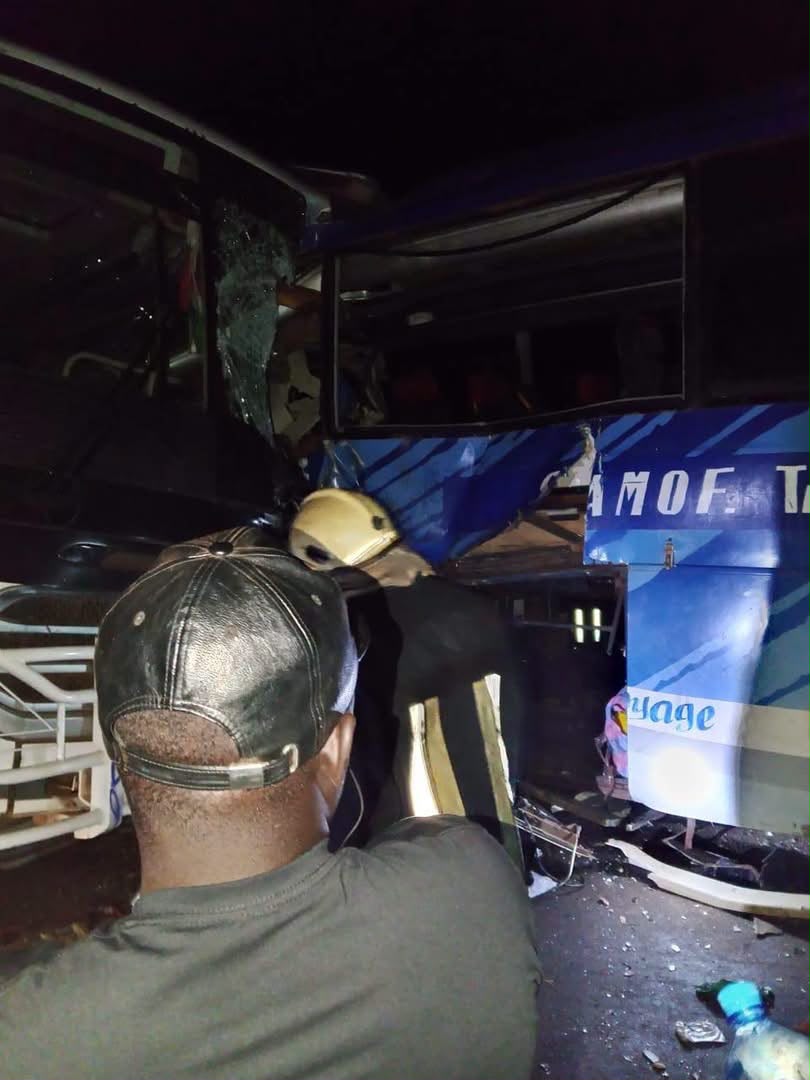
Le bilan provisoire fait état de six personnes décédées sur le coup. Plusieurs autres passagers, grièvement blessés, ont été secourus par les éléments de la Brigade nationale de sapeurs-pompiers (BNSP) de Koudougou, puis évacués vers les centres de santé de Koudougou et de Sabou pour une prise en charge.
Lefaso.net
Source : Les Éditions Sidwaya
Categories: Afrique
CAN 2030 : Le Burkina Faso accueille une première mission d'évaluation de la CAF
Dans le cadre du projet de co-organisation de la Coupe d'Afrique des Nations (CAN) 2030 par les pays membres de la Confédération des États du Sahel (AES), à savoir le Burkina Faso, le Mali et le Niger, une mission d'évaluation de la Confédération africaine de football (CAF), conduite par Emmanuel Newton Dasoberi, Manager professionnel de football, a été reçue en audience par la ministre en charge des Sports, Annick Pikbougoum/Zingue Ouattara, ce dimanche 8 novembre 2026. Selon l'information publiée sur la page Facebook du ministère des Sports, de la Jeunesse et de l'Emploi, cette rencontre a permis à la délégation de faire le point de sa visite d'évaluation des infrastructures et des installations burkinabè auprès de la ministre.
Au cours de cette première évaluation, les experts ont passé en revue plusieurs éléments essentiels à l'organisation d'une compétition continentale de cette envergure. Il s'agit notamment des personnes-ressources, des infrastructures sportives et des établissements hôteliers. Dans la journée du 8 novembre, la délégation a visité le Stade du 4-Août, le Centre d'entraînement des Étalons (COMET), qui dispose de deux terrains, ainsi que l'hôtel Lancaster Ouaga 2000.
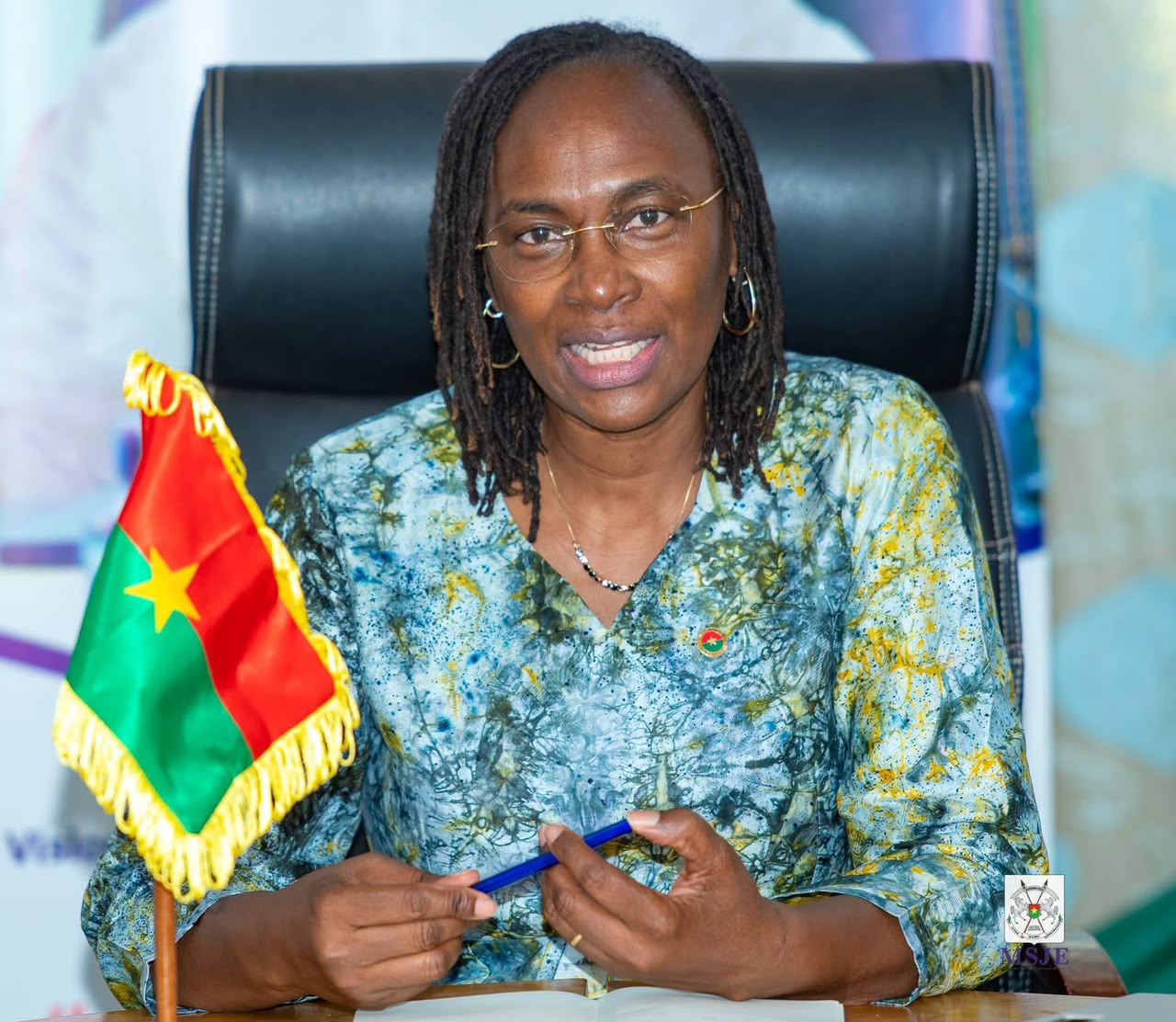
Cette visite a mobilisé plusieurs acteurs institutionnels et techniques dont des représentants de la Primature, des ministères en charge des Affaires étrangères, de la Construction de la patrie et de la Santé, des membres fédéraux, du Bureau national des grands projets, de Faso Mêbo ainsi que Toussaint Somdah, expert indépendant.
Cette première étape devrait être suivie d'autres missions d'experts de la CAF, notamment dans les domaines de la sécurité, des technologies de l'information, des infrastructures et commodités, ainsi que de la santé. Ces évaluations successives permettront d'apprécier les capacités et les dispositions des pays candidats, en concertation avec le Mali et le Niger.
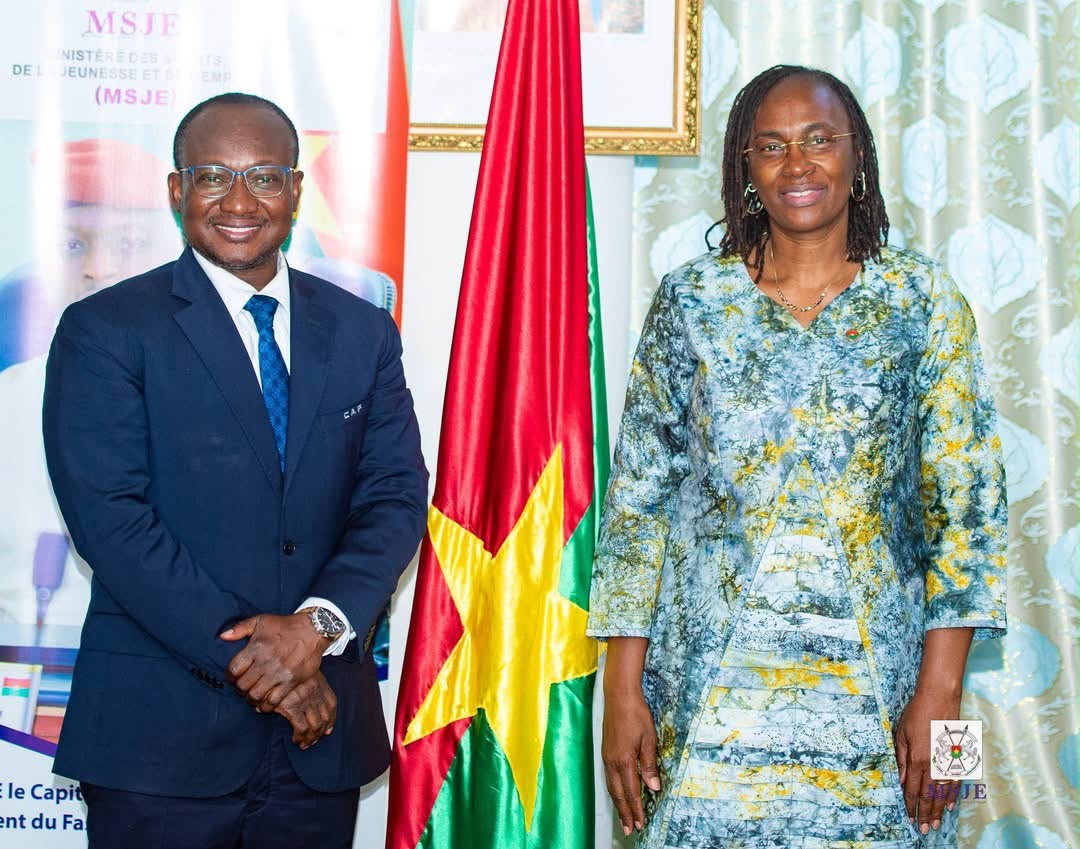
La ministre, Annick Pikbougoum/Zingue Ouattara, quant à elle, a réaffirmé la volonté du gouvernement burkinabè et des États membres de l'AES de constituer un dossier solide, susceptible d'obtenir l'accord de la CAF pour l'organisation de la CAN 2030 pour le bonheur de la population de l'espace AES.
Lefaso.net
Source : DCRP/MSJE
Categories: Afrique
Somali Olympic boxer Ali weeps as world title dream realised
Ramla Ali dedicated her win to her late father as she defeated Mikiah Kreps to become the unified super-bantamweight world champion.
Categories: Africa
Latest news - Next meeting - Subcommittee on Human Rights
Next ordinary meeting of the Subcommittee on Human Rights will be held on 30 November - 1 December 2026, in Brussels.
AFET and DROI meetings - 2026
AFET and DROI meetings - 2027
DROI Coordinators
Source : © European Union, 2026 - EP
Categories: Union européenne
Serbia’s Student Movement: From Protest to Power
Tens of thousands of people take to the streets late into the night to celebrate the student-led opposition coalition's victory in Belgrade, Serbia, on 26 October 2026. Credit: Aleksandar Jovicic/NurPhoto
By Andrew Firmin
LONDON, Nov 9 2026 (IPS)
On the night of 25 October, tens of thousands filled the streets of Belgrade and other cities, as they’d so often done in protest over the past two years. But this time they came out to celebrate. In that day’s National Assembly election, Student List, a slate of political newcomers, defeated Aleksandar Vučić’s Serbian Progressive Party (SNS), in power since 2012. The student-led movement behind the protests, which rose up against corruption, has given Serbia the opportunity for a democratic reset.
From grief to protest
Serbia became steadily more autocratic under Vučić. Public institutions served ruling-party interests amid a web of corruption, patronage, coercion and impunity. Public media became a ruling party mouthpiece.
Civic freedoms deteriorated dramatically. In 2018, the CIVICUS Monitor rated Serbia’s civic space as narrowed, meaning that fundamental rights were broadly respected. By the end of Vučić’s rule, the rating had collapsed to repressed, meaning that criticising those in power carried severe risks. The state used violence against protests and treated civil society as a security threat, targeting it with spyware and subjecting organisations to raids and police investigations.
The seismic shift began in November 2024 with the collapse of a railway station canopy in Novi Sad, Serbia’s second-largest city. Sixteen people died. The government insisted it was a tragic accident, but the station had only recently been renovated and, with construction contracts shrouded in secrecy, many suspected corners had been cut. For protesters, this was a lethal symbol of the costs of corruption, negligence and impunity. No one has been held accountable.
Students held vigils and mass protests on a scale unseen since 2000, when demonstrations ousted Slobodan Milošević, the infamous authoritarian leader and accused war criminal. This time, their most effective tactic was a months-long education strike in which they blockaded and occupied universities.
As the protest movement grew it connected with existing groups, including environmental and legal aid organisations, independent media and, crucially, academics, university administrators and education unions, who took solidarity strike action. This built wider public support, backed by a ‘students in every village’ campaign that saw students meet with rural communities to ask about what mattered most to them.
State attempts to suppress the movement failed, including mass arrests, violence by security forces and gangs of ruling-party supporters and an extensive campaign of disinformation and smears. Vučić vilified protesters as agents of foreign powers bent on subversion and the government fired education sector employees for taking part in strikes.
Change on the cards
Ultimately, the protests forced Vučić’s hand. Constitutionally barred from seeking a third term as president, he announced an early parliamentary election in June and stood down as president in September, making clear his intention to hold onto power as prime minister. He presumably gambled that a skewed playing field, characterised by intimidation and biased coverage, would let him win again and unleash an even fiercer crackdown.
The gamble failed because of the movement’s discipline and the smart choices it made. Throughout, students resisted opposition parties’ attempts to co-opt them, insisting that deeper change was needed to re-establish the rule of law, free public institutions from political capture and tackle corruption. From its early days, the movement practised internal democracy, taking decisions in university plenums, open assemblies where people debated, learned and decided together. When it decided to field a slate of candidates, it used the same method to select them. Students didn’t put themselves forward, choosing instead public figures untainted by association with established politics and likely to command broad support. Those who’ve won seats include academics, actors, former sports stars and medical professionals.
The result surpassed all predictions. According to projections based on the preliminary count, Student List has around 53 per cent of the vote, which would give it a clear majority of 141 of the National Assembly’s 250 seats. The SNS-led bloc trails on around 39 per cent. The margin was such that Vučić had to concede quickly.
Challenges of power
After the euphoria comes the challenge of moving from protest to power. A movement that has refused to have formal leaders must now unite behind a prime minister. Once the National Assembly convenes, Student List will have 90 days to form a government. Its deliberately broad campaign focused on major questions of national renewal but offered little detail. This strategy papered over political differences among representatives who range from nationalist to more liberal, which can be expected to surface if the incoming government succeeds in restoring the space for normal political debate. There’s also the question of how those elected will relate to the student movement.
As in Hungary, where long-term autocratic leader Viktor Orbán finally fell to electoral defeat in April, the new government will face the difficult task of reorienting state institutions that have bent to the former ruling party’s interests. An early sign of change came when the public broadcaster apologised to viewers for its bias towards the SNS, something that also happened in Hungary. The government will need to repay voters’ faith by rooting out corruption, which will mean overhauling institutions including the judiciary and police. All this will unfold alongside a presidential election that’s due by the end of the year.
Challenges lie ahead, but a population that has rediscovered the power of collective action can face them with confidence. Serbia also offers a vital source of international inspiration. Together with Hungary’s example, it shows there’s nothing permanent about autocratic rule. The world’s many Gen Z-led movements that have self-organised to demand a fairer distribution of economic and political power, and civil society more broadly, can take heart. Serbia has shown that organising and protesting works, and change is possible.
Andrew Firmin is CIVICUS Editor-in-Chief, co-director and writer for CIVICUS Lens and co-author of the State of Civil Society Report.
For interviews or more information, please contact research@civicus.org
Categories: Africa
Pologne: l'auteur de la fusillade à Cracovie est mort, annonce la police
Il ne répondra jamais de ses actes : l'auteur de la tuerie qui a fait six morts et 15 blessés samedi 7 novembre à Cracovie, un Polonais de 24 ans grièvement blessé par des policiers, est mort ce lundi 9 novembre. Le parquet estime que rien ne permet à ce stade d'associer « de manière catégorique » l'auteur de la tuerie à une idéologie particulière.
Categories: Union européenne
Pages


© 2012-2018 Europa Varietas Foundation © 2015-2018 Europa Varietas Association
www.europavarietas.org | info(@)europavarietas(dot)org | Switzerland


We are looking for sponsors for the English translation of these books, please contact turkeandras(at)gmail(dot)com