
You are here
Feed aggregator
Despite Chinese Mediation Efforts, Taliban-Pakistan Conflict Continues With New Strikes
The rupture between Afghanistan’s Taliban and their erstwhile allies in Pakistan continues to cause suffering on both sides of the border.
Categories: Diplomacy & Crisis News
Czech-Taiwan Ties Are Cooling in Rhetoric, Not Reality
Czechia’s new government has changed its tone on Taiwan, but left most of the substance of the relationship intact.
Categories: Diplomacy & Crisis News
Un fossile resté dans un tiroir pendant des décennies s'avère être la plus ancienne découverte d'un dinosaure en Antarctique
Un fossile d'apparence banale, resté oublié dans un tiroir pendant 40 ans, s'est avéré être le premier os de dinosaure jamais découvert en Antarctique.
Categories: Afrique
Pour enfin mieux aimer
Comment résumer un livre qui semble avoir été écrit dans le but même d'en rendre impossible tout résumé ou de rendre caduc tout point de vue surplombant sur la vie ? Nos vies ne sont-elles pas faites d'une tout autre matière — vertige et mémoire ? « Pittsburgh, 1939-1942… Descendant dans la rue (…)
/ Roumanie, Littérature, Autobiographie, Fiction
Categories: Diplomacy & Crisis News
Respect Strength, Question Power: Reflections from the 2026 Digital Rights Asia-Pacific Assembly
Collective care should not be reduced to practices that merely keep us strong enough to survive hostile conditions. Collective care should also make us question, resist, and transform the very systems of power that generate harm. Credit: Humanis
By Nisrina Nadhifah Rahman
Jul 2 2026 (IPS)
“To respect strength, never power” is one of my favorite quotes from the acclaimed writer and activist, Arundhati Roy. For years, this quote has stayed with me. It encourages a way of life grounded in compassion rather than dominance.
It was particularly on my mind as I returned from the June 2026 Digital Rights Asia-Pacific Assembly (DRAPAC26) in Manila, an annual forum organized by EngageMedia. Co-hosted by local partners, the Foundation for Media Alternatives (FMA) and DAKILA, it brought together more than 800 digital rights practitioners, researchers, funders, journalists, technologists, and activists from across the Asia-Pacific region.
But my participation in DRAPAC started long before I arrived in Manila. Throughout the first half of 2026, through the Connect, Defend, Act! program, I had been engaging with civil society actors at workshops held across different regions.
Moving in harmony with one anotherDuring a session on collective care at one of them, we asked if abstract principles like human rights, solidarity, resilience, and collective care could be translated into concrete care practices. If so, what would that look like?
One group responded with a local expression: “Na Pada Ajong Ta.” It means to move in harmony with one another, walking side by side and sharing a common rhythm.
I was instantly struck by the phrase.
AI outputs are shaped not only by data, but also by the social, political, and economic structures that determine whose knowledge is collected, whose views and experiences are prioritized, and whose realities are ignored
We are constantly being told to “unite” by both figures of authority and agents of change. But what they want is us to move in the same direction, at the same pace, and with the same voice. Yet perhaps what we need is something closer to “Na Pada Ajong Ta,” walking side by side without marching in lockstep.
The DRAPAC Assembly took me back to these questions about power, accountability, humanity, and collective care, especially in the discussions on how we frame activists and human rights defenders.
An important discussion revolved around the growing glorification of the “resilience” of activists and human rights defenders. Stories of sacrifice, adaptation, and perseverance are often presented as inspiring accounts of brave individuals fighting for justice in increasingly challenging environments.
Yet I found myself wondering: What happens when resilience becomes an unquestioned virtue? What if our admiration for people’s endurance blinds us to the systems that oppress them? Or traps us in a worldview that celebrates those strong enough to endure, while those who struggle or fall behind are quietly left to fend for themselves?
So, interrogating power in conversations about resilience also means challenging a narrow understanding of collective care. It should not be reduced to practices that merely keep us strong enough to survive hostile conditions. Collective care should also make us question, resist, and transform the very systems of power that generate harm.
AI (just like any other technology) is never neutralThroughout DRAPAC, countless sessions explored different dimensions of Artificial Intelligence (AI). For me, the most interesting ones treated AI as a political development.
One recurring insight was that AI outputs are shaped by far more than users’ prompts. They are also influenced by invisible system prompts, training datasets, institutional priorities, commercial interests, and political decisions embedded within the technology itself.
In other words, AI reflects the values, assumptions, and most importantly, the power relations built into it.
One of the most well-known principles in computer programming is the phrase “Garbage In, Garbage Out” (GIGO). At its simplest, the principle suggests that the quality of an output depends on the quality of the input.
But after the discussions at DRAPAC, I have come to see GIGO as more than a technical principle. It is also a political one. “Garbage In, Garbage Out” is ultimately a question of power. AI outputs are shaped not only by data, but also by the social, political, and economic structures that determine whose knowledge is collected, whose views and experiences are prioritized, and whose realities are ignored.
The power of the attention economyWriter and scholar Alfie Bown’s 2022 book, Dream Lovers: The Gamification of Relationships, explores how human desires are increasingly shaped to suit certain economic and political agendas, creating a profound dependency on algorithm-driven technology.
At DRAPAC’s “Algorithm Anonymous” session, we also explored how digital platforms are actually systems of control designed to both capture attention and influence habits, desires, and emotional attachments.
We started off by acknowledging that our choices, behaviors, and things we pay attention to online are often shaped by algorithms. And we examined the deceptive design tricks used by websites and apps that get users to do things they hadn’t planned to, like buying something, sharing more data, or signing up for services.
Then we reflected on how social media, fitness applications, and health platforms create validation loops that encourage continuous engagement, often treating privacy and user agency as an afterthought.
The many forms power takesAs I left DRAPAC, I couldn’t help but think that Arundhati Roy’s reminder to “respect strength, never power,” is perhaps not enough. Because strength, much like power, also has layers that need to be scrutinized and questioned. And while doing so, we also need to re-examine our own roles and individual social and political identities.
We must be clear on where we stand in relation to the systems and structures around us. That doesn’t mean to stop questioning power, but to remain curious about the many forms it takes, including those we may have internalized without realizing it.
Nisrina Nadhifah Rahman is the Indonesia country-level Lead for the Connect, Defend, Act! program at Humanis.
Categories: Africa
Understanding China’s Party-State Intelligence System
It’s not “whole of society” – and calling it that risks discrimination against ethnic Chinese.
Categories: Diplomacy & Crisis News
Difficile d'habiter ce monde
Voici l'histoire d'un retour. Un retour au Kosovo, à deux moments très différents. Le narrateur, tout jeune, y retourne avec ses parents en 1996 — deux ans avant le conflit armé. Adulte, c'est dans le Kosovo d'après-guerre qu'il revient, en compagnie de sa mère. Petit, il n'avait pas de souvenir (…)
/ Kosovo, Littérature, Migrations, Violence
Categories: Diplomacy & Crisis News
How UN Peacekeeping Operations Are Adapting to Contingency Measures
The UN’s ongoing liquidity crisis has forced peacekeeping operations to implement contingency measures that have significantly reduced personnel, patrols, mission footprints, and programmatic activities. As missions adapt to these constraints, they face difficult trade-offs in maintaining mandate delivery while responding to increasingly complex security environments.
In this context, the International Peace Institute (IPI), in partnership with the permanent missions of Denmark, Germany, the Netherlands, and Pakistan to the United Nations, convened a workshop to examine how UN peacekeeping operations are adapting to contingency measures. The discussion brought together member-state representatives and UN officials from headquarters and the field to assess the operational implications of the cuts and identify lessons for the future of peacekeeping.
Key themes from the discussion included the growing reliance on mobile operational approaches, the impact of reduced mission presence on the protection of civilians and community engagement, increasing risks to peacekeeper safety and security, the opportunities and limits of digital technologies, the importance of strategic communication with host states and local communities, and the critical role of partnerships in sustaining mandate implementation amid resource constraints.
The post How UN Peacekeeping Operations Are Adapting to Contingency Measures appeared first on International Peace Institute.
Categories: Diplomacy & Defense Think Tank News
Lakenheath F-15Es Return From Middle East Combat Deployment With Striking Nose Art
Eleven 48th Fighter Wing Strike Eagles have returned home from the Iran air war sporting interesting nose art and bomb markings.
On Jul. 1, 2026, eleven F-15E Strike Eagles belonging to the 48th Fighter Wing returned home from their latest combat tour in the Middle East. Although some aircraft carried 494th FS markings, according to our sources all the aircrews were from the 492nd Fighter Squadron “Madhatters” (or “Bolars” from the squadron’s callsign). It is not unusual for the two squadrons of the 48th Fighter Wing to pool aircraft and borrow jets from one another when some airframes are unavailable.
The jets made their way back to RAF Lakenheath from Jordan, where they had been deployed to support Operation Epic Fury, with a stopover at Sigonella Air Base in Italy.
Flying as TREND 11-15 and TREND 21-26, the first eight jets landed before sunset. Despite the poor lighting conditions, our contributor Stewart Jack was there and took some interesting photographs of the F-15Es. The shots reveal nicknames and nose art applied to the jets, as has become a tradition for deployments to the CENTCOM AOR (area of responsibility). In this case, the nicknames appear to follow a monster/cryptid theme, mixing mythological creatures and horror figures.
Overall, the first eight Strike Eagles were nicknamed Nessie, Kraken, Yeti, Chupacabra, Cthulhu, Cerberus, Sirenhead and El Jefe. The final three F-15Es landed at around 21:45 LT, when it was much darker, and for the moment we have been unable to determine their nicknames.
More in details the aircraft arrived in the following order:
00-3001 “Nessie”
91-0329 “Kraken”
97-0221 “Yeti”
01-2001 “Chupacabra”
91-0331 “Cthulhu”
91-0309 “Cerberus”
96-0205 “Sirenhead”
91-0324 “El Jefe”
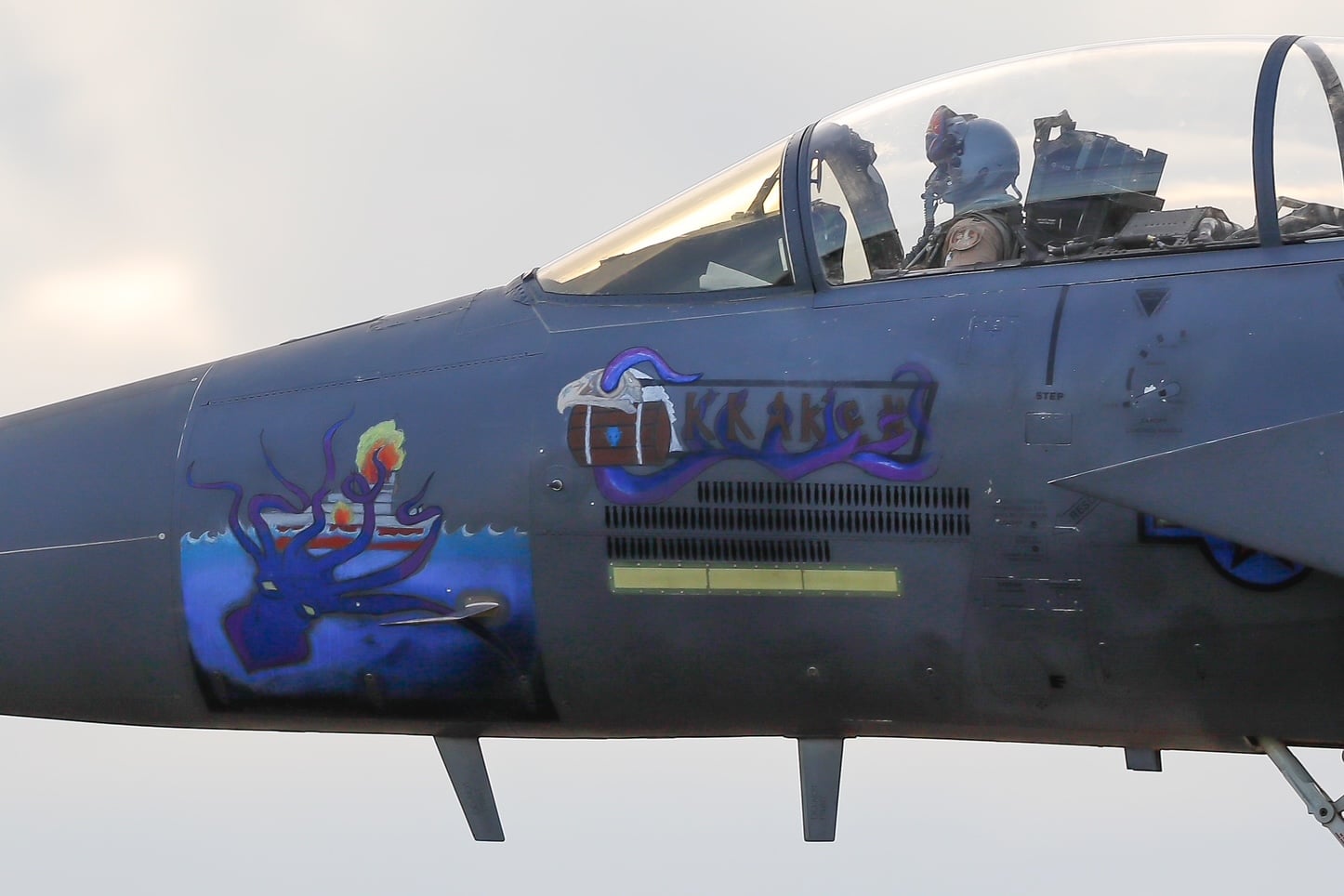
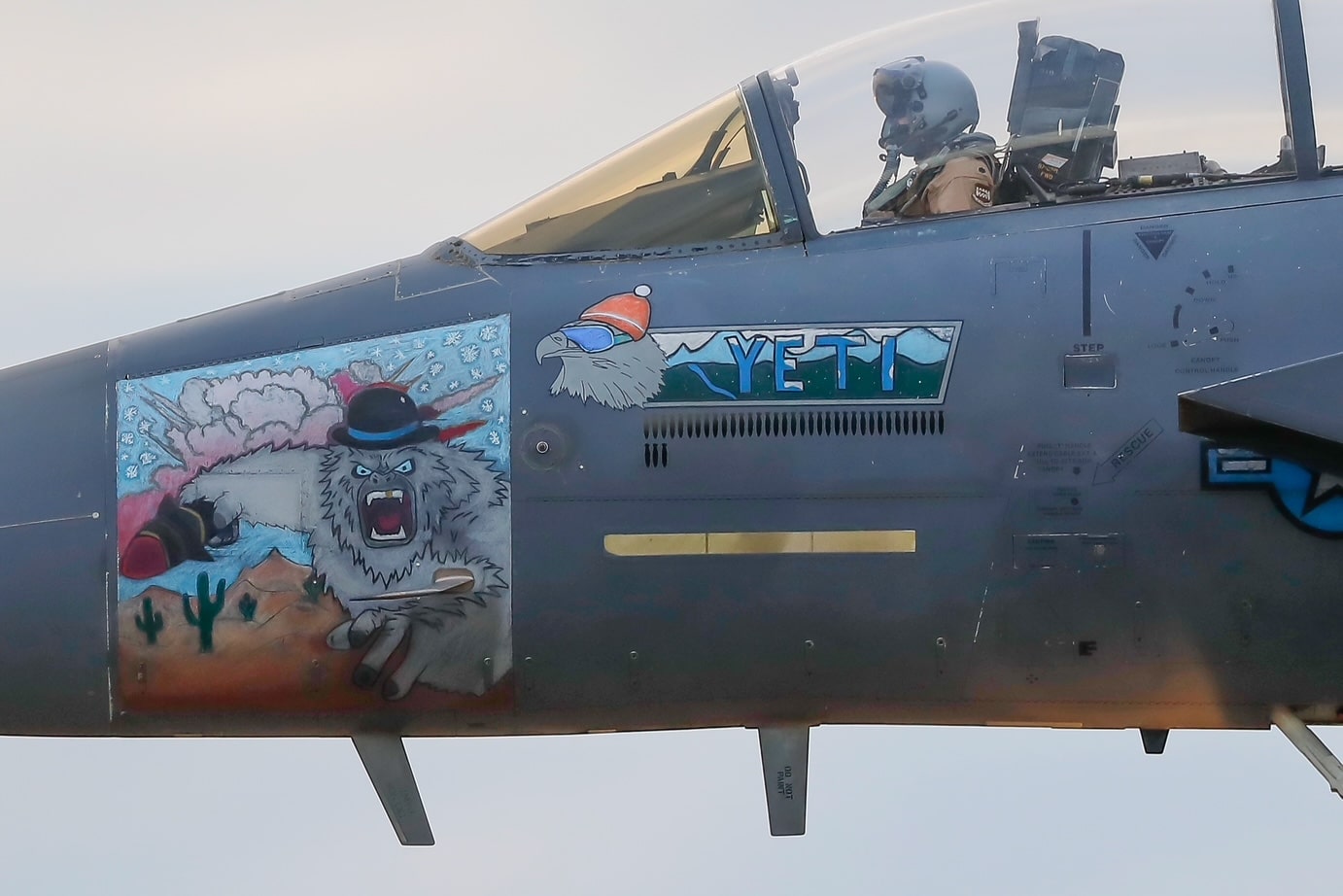
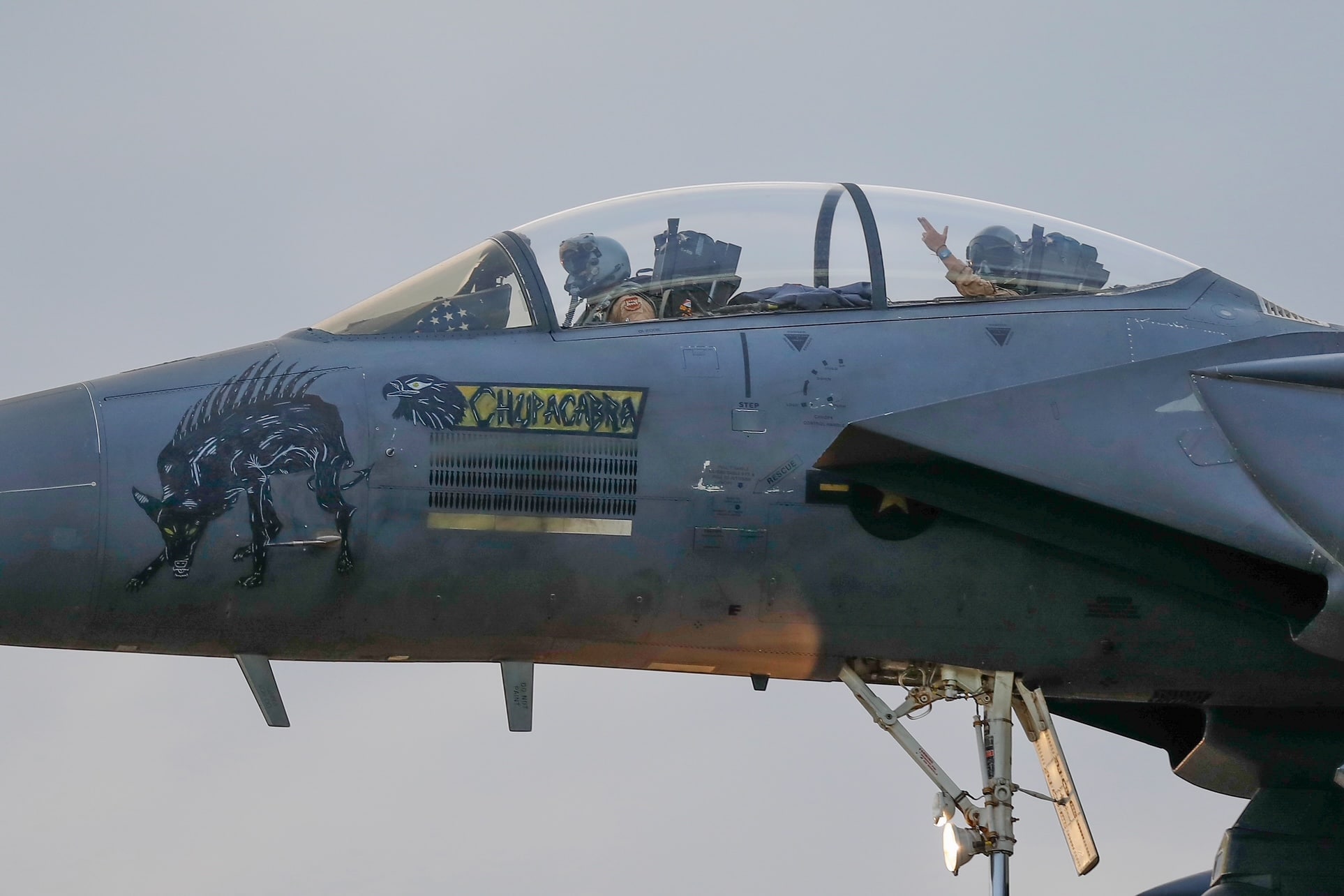
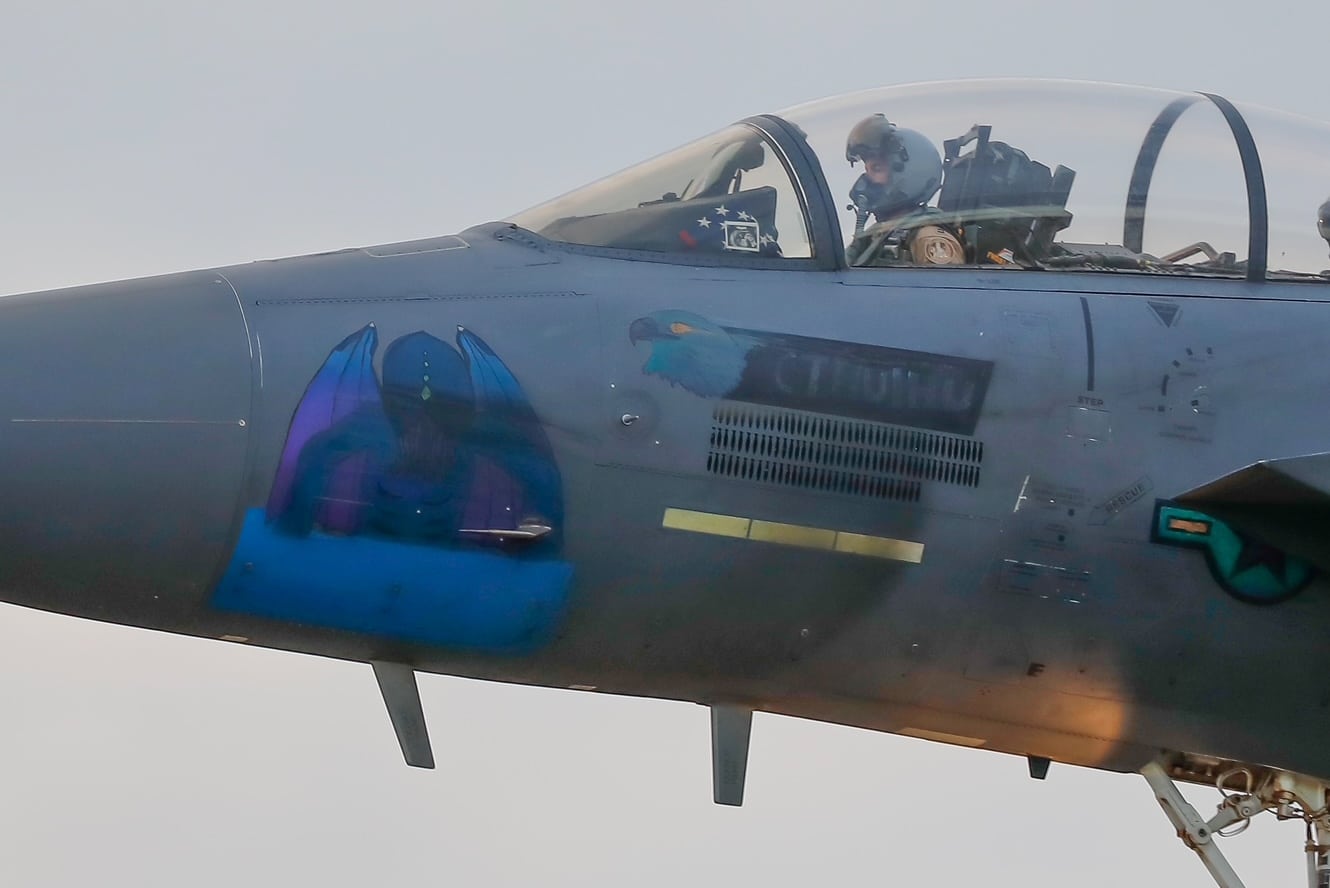
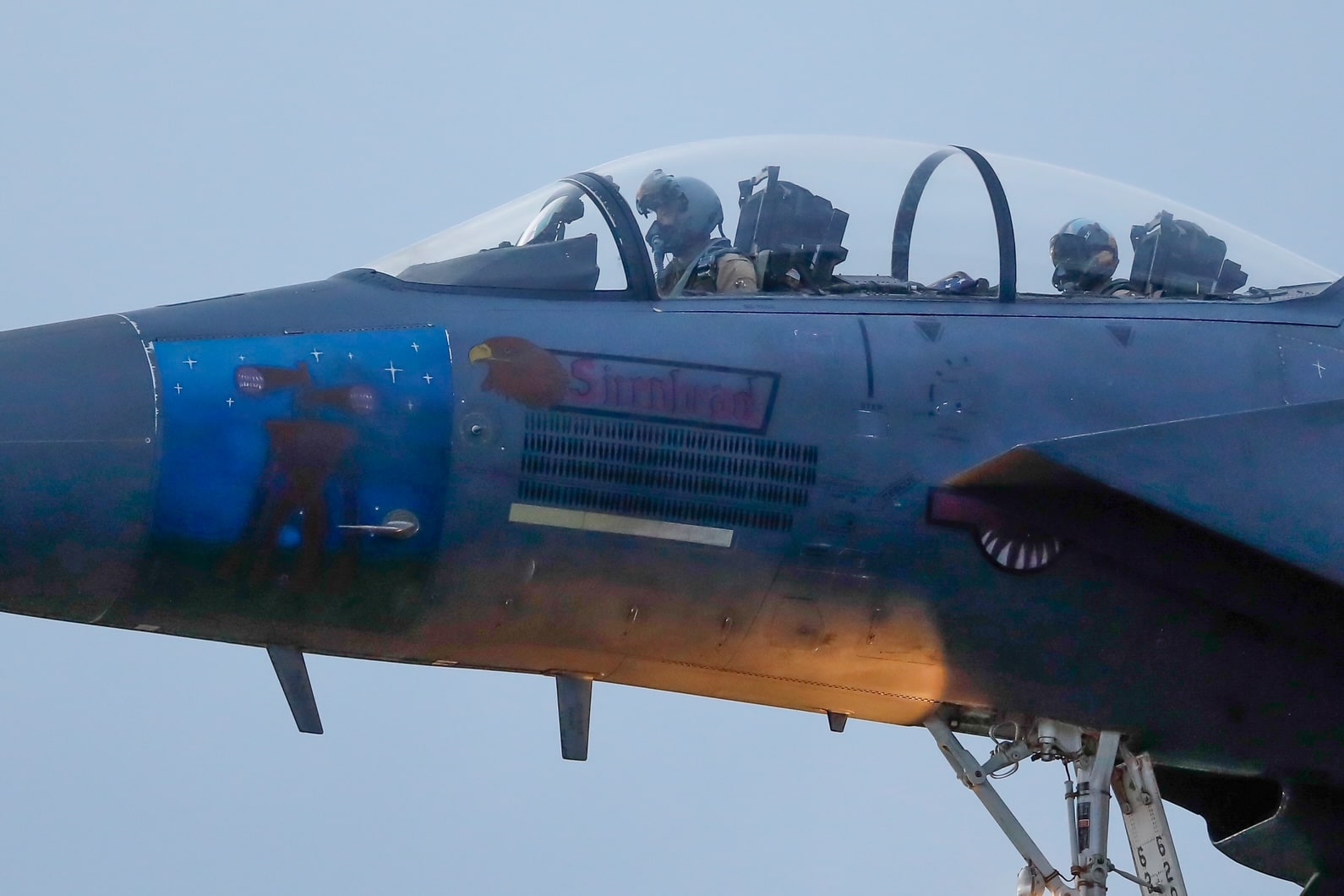
All the aircraft sport a significant number of JDAM (Joint Direct Attack Munition) markings, with two of them, “Cerberus” and “El Jefe,” also painted with what appear to be AGM-158 JASSM (Joint Air-to-Surface Standoff Missile) silhouettes. Noteworthy, the first eight aircraft don’t seem to sport any APKWS II markings.
91-0309 “Cerberus” | Source: Stewart Jack 91-0324 “El Jefe” | Source: Stewart Jack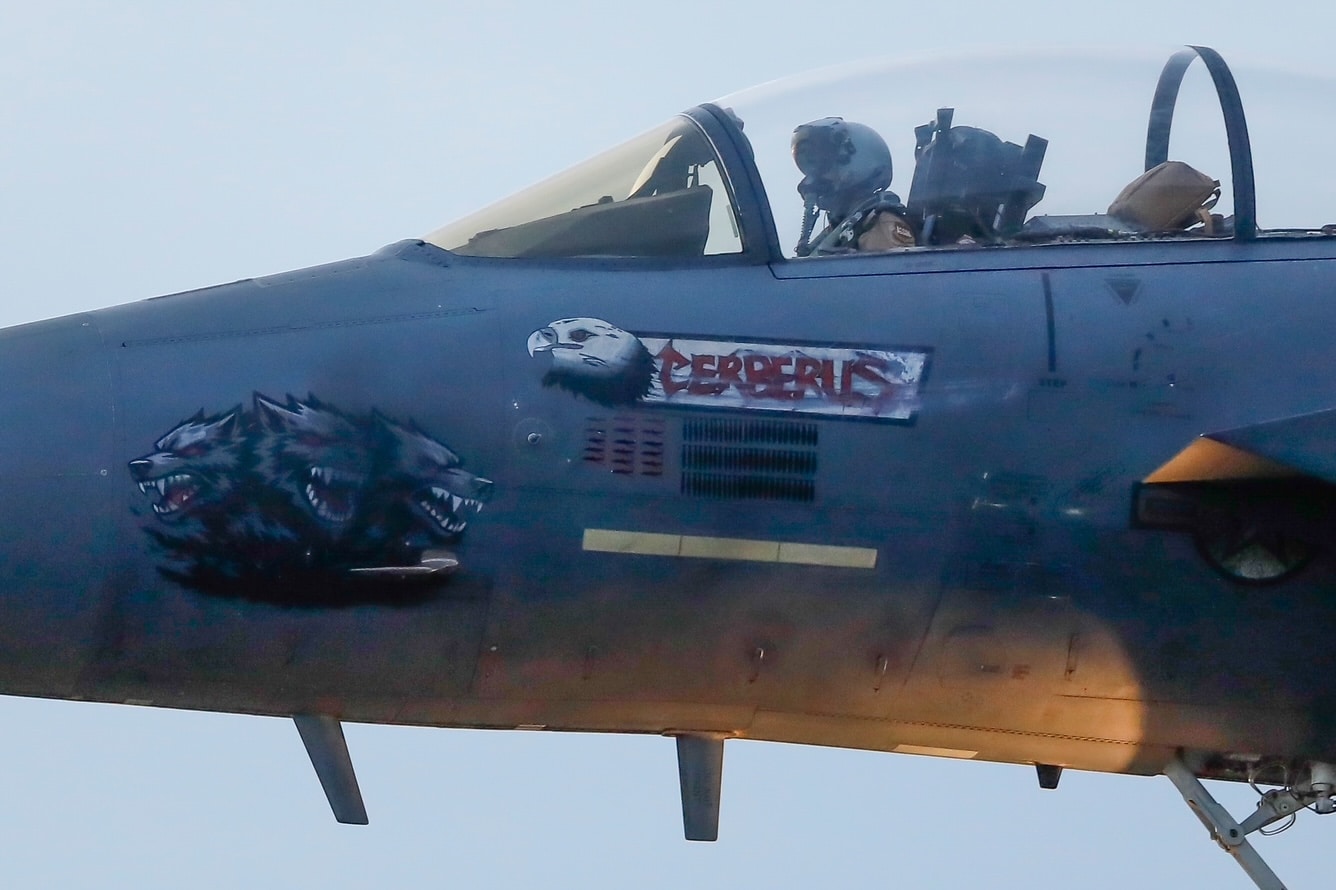

Nose art and nicknames on Strike Eagles deployed to the Middle East first appeared on the 18 F-15E Strike Eagle jets belonging to the 391st Expeditionary Fighter Squadron returning to Mountain Home AFB from OIR (Operation Inherent Resolve) in April 2019. Since then, it has become a standard for all the F-15E squadrons deployed to the CENTCOM AOR.
A big thank you to our contributor Stewart Jack Photography for sending us his photos!
Categories: Defence`s Feeds
Asia Is Racing to the Arctic, But It’s Not Easy
The political momentum for the Northern Sea Route is real. However, the actual data looks a lot less rosy.
Categories: Diplomacy & Crisis News
What the ‘Mother of All Trade Deals’ Learned From the India-ASEAN FTA
India has spent the last 16 years paying for its trade deal with ASEAN. The India-EU FTA would not repeat those mistakes.
Categories: Diplomacy & Crisis News
Les 10 meilleures universités d'Afrique en 2026
Les universités africaines jouissent d'une reconnaissance croissante sur la scène internationale, grâce à une production scientifique solide, à des collaborations internationales et à une influence académique grandissante.
Categories: Afrique
Les 10 meilleures universités d'Afrique en 2026
Les universités africaines jouissent d'une reconnaissance croissante sur la scène internationale, grâce à une production scientifique solide, à des collaborations internationales et à une influence académique grandissante.
Categories: Afrique
EMPFEHLUNG zu dem Vorschlag für einen Beschluss des Rates über den Abschluss – im Namen der Europäischen Union – des Abkommens über eine politische, wirtschaftliche und kooperative strategische Partnerschaft zwischen der Europäischen Union und ihren...
EMPFEHLUNG zu dem Vorschlag für einen Beschluss des Rates über den Abschluss – im Namen der Europäischen Union – des Abkommens über eine politische, wirtschaftliche und kooperative strategische Partnerschaft zwischen der Europäischen Union und ihren Mitgliedstaaten einerseits und den Vereinigten Mexikanischen Staaten andererseits
Ausschuss für auswärtige Angelegenheiten
Ausschuss für internationalen Handel
Borja Giménez Larraz, Javi López
Quelle : © Europäische Union, 2026 - EP
Ausschuss für auswärtige Angelegenheiten
Ausschuss für internationalen Handel
Borja Giménez Larraz, Javi López
Quelle : © Europäische Union, 2026 - EP
Categories: Europäische Union
Marseille, les prolos, les bobos
La cité phocéenne aurait-elle définitivement basculé du côté de la « ville-spectacle » ? Plusieurs travaux révèlent qu'au sein du Marseille populaire le mistral de la résistance souffle encore. Dans une somme impressionnante, l'essayiste Alèssi Dell'Umbria retrace plus de mille ans d'histoire (…)
/ France, Ville, Histoire, Logement, Urbanisme
Categories: Diplomacy & Crisis News
Guam: Where America’s 250th Birthday Will First Be Honored
As the country celebrates its past, let it also recognize the place where its future security begins: an island that has given more to the United States than most Americans will ever know.
Categories: Diplomacy & Crisis News
Italy’s Indo-Pacific Strategy Turns Toward Defense Contracts
Italy is making an unexpectedly assertive return to Southeast Asia – not through trade or development aid, but through defense diplomacy.
Categories: Diplomacy & Crisis News
Press release - Press briefing on next week’s plenary session
Spokespersons for Parliament and for the political groups will hold a briefing on the 6-9 July plenary session, on Friday at 11.00 in Parliament’s Anna Politkovskaya press room.
Source : © European Union, 2026 - EP
Source : © European Union, 2026 - EP
Categories: European Union
BIMSTEC, Northeast India, and an Overlooked Pillar of the Act East Policy
India’s Act East Policy should be judged by its ability to change from articulating strategy to putting that strategy into practice in the Northeast, via BIMSETC.
Categories: Diplomacy & Crisis News
Forging China-US ‘Constructive Strategic Stability’ Starts in the Nuclear Realm
Real strategic stability starts with recognizing mutual vulnerability.
Categories: Diplomacy & Crisis News
Pages


© 2012-2018 Europa Varietas Foundation © 2015-2018 Europa Varietas Association
www.europavarietas.org | info(@)europavarietas(dot)org | Switzerland


We are looking for sponsors for the English translation of these books, please contact turkeandras(at)gmail(dot)com