
You are here
European Union
Franco-German-led ‘E6’ format will be ‘temporary’, says Eurogroup president
Pierrakakis says he is "positive" about the decision by France, Germany, Italy, the Netherlands, Poland, and Spain to accelerate market integration
Categories: Biztonságpolitika, European Union
IRAN: ‘Sustainable Change Will Depend on Domestic Organisational Capacity, Not External Force’
By CIVICUS
Feb 16 2026 (IPS)
CIVICUS discusses the recent protests in Iran with Sohrab Razaghi, executive director of Volunteer Activists, a Netherlands-based diaspora organisation empowering Iranian civil society.
Sohrab Razaghi
Protests triggered by economic grievances erupted across Iran on 28 December, quickly evolving into broader anti-regime protests. The crackdown that followed resulted in what may be the largest massacre in modern Iranian history.What sparked the protests, and in what ways were they different from previous ones?
Rising prices and the collapse of the national currency initially sparked the protests, but these quickly expanded beyond economic grievances. At least in part, this is because the economy is no longer seen as a purely technical issue but as a measure of the state’s ability to govern. A central question among social groups now is whether the government can manage crises and provide sustainable solutions.
Anger has built up, reflecting broken promises and lost futures. Over the past three decades, four major protest waves – in 2009, 2017, 2019 and 2022 – were met with repression, denial or superficial reforms. This pattern has produced a strong sense of humiliation and political voicelessness.
But perhaps the most decisive factor in the latest wave of protests has been the role of Generation Z, a generation that did not experience the 1979 revolution or the war with Iraq and does not have the ideological attachments of earlier generations. The dividing line is not just age but also expectations, lifestyles and values. While previous generations used to hope for gradual reform within the system, now many young people see no viable future within the current framework. For them, the most rational responses to what they perceive as a structural dead end are disengagement, migration or radical protest.
Recent protests, particularly those of 8 and 9 January, also reflected shifts in protest dynamics, with higher levels of violence visible in both rhetoric and practice. This escalation likely reflects accumulated frustration and political deadlock, but doesn’t necessarily indicate that the state has weakened. Security forces so far appear cohesive and operationally effective, and there are no clear signs of fragmentation inside the coercive apparatus.
But the rise in violence is troubling for democratic forces and civil society. When violent tactics become prominent, organised civic initiatives are marginalised and security-driven narratives prevail, weakening sustained civic action.
Additionally, Israeli and US statements expressing support for protesters and threatening military action had contradictory and largely negative effects.
While such rhetoric initially generated hope among some protesters, the lack of follow-up produced disillusionment and scepticism. Most importantly, statements by foreign governments, including Israel and the USA, strengthened the regime’s narrative. They enabled the authorities to frame protests as the products of foreign interference and protesters as instruments of external powers, including claims of involvement by Mossad agents. This narrative was very useful to justify securitisation and repression.
How have civil society and the media documented human rights violations amid internet shutdowns?
During near-total internet blackouts, local and community-based groups played crucial roles. They recorded the time and location of incidents, collected testimonies from multiple sources and preserved legal, medical and visual documentation while observing basic digital security principles.
When limited internet access became available, information was shared securely with international partners and diaspora networks. These networks helped archive data, liaise with human rights organisations and media and reduce pressure on activists operating inside Iran. International human rights organisations then cross-checked and verified reports before incorporating them into official documentation. Because communication shutdowns, security risks and restricted access to evidence prevented full documentation, they typically presented casualty figures and details of repression conservatively. At the same time, fake news and baseless casualty figures are also prevalent in diaspora and international media reports. It is essential to interrogate such reporting to preserve the credibility of fact-checked, evidence-based reports.
Under severe restrictions, independent and evidence-based documentation has been essential to preserve truth, counter denial and lay the groundwork for future accountability.
What’s limiting sustained pressure for change?
Recent protests have not expanded into broader forms of social organisation. Participation by labour unions, local networks and professional associations has been limited, restricting the potential for sustained institutionalised pressure. Without stronger organisational structures, documentation of abuses won’t necessarily translate into coordinated civic action. Social media-based coordination and mobilisation are effective for the start and first phase of protests, but on-the-ground leadership, networks and organising capacity are instrumental for sustaining protests and increasing pressure for change.
At the discursive level, significant attention has focused on appeals for foreign pressure rather than on building internal coalitions among social groups. In some cases, rhetoric has centred on state collapse rather than democratic transition, a framework that risks instability and further social fragmentation. The use of profanity and violent language – both inside Iran and among the diaspora community – has also alienated families and moderate groups, narrowing rather than broadening support.
Ultimately, for protests to evolve into movements capable of exerting sustained pressure for change, what’s needed is inclusive organisation, coalition-building and a unifying narrative.
What should the international community do to strengthen Iranian civil society?
Sustainable change will depend on domestic organisational capacity, leadership and representation, not external force. So international leaders should avoid war rhetoric and avoid engaging in any form of military intervention. Historical experience suggests that even limited foreign military intervention is unlikely to weaken domestic repression. Instead, it may well increase regime cohesion, at least in the short term, intensify nationalist sentiment and raise the costs faced by civil society activists, who can be easily portrayed as collaborators and traitors.
When supporting Iranian civil society, international allies should prioritise independent, nonviolent civil society organisations rather than opposition groups advocating violence. Narratives of ‘collapse at any cost’ marginalise civic initiatives and undermine the prospects of democratisation.
Long-term investment in capacity strengthening is essential. This includes supporting civic organising skills, digital security, democratic advocacy, nonviolent action and secure communication tools. Over recent decades, resources and repertoires for change within civil society have been weakened. Sustained engagement is required to rebuild these capacities, with up-to-date resources, techniques and tools.
Monitoring, documentation and evidence-based reporting grounded in credible local sources are among the most effective forms of support. Accurate reporting strengthens prospects for accountability and limits the space for propaganda.
Ultimately, sustainable democratic change in Iran will depend on civil society acting independently, rooted in domestic capacities and supported by context-aware, non-interventionist international engagement.
CIVICUS interviews a wide range of civil society activists, experts and leaders to gather diverse perspectives on civil society action and current issues for publication on its CIVICUS Lens platform. The views expressed in interviews are the interviewees’ and do not necessarily reflect those of CIVICUS. Publication does not imply endorsement of interviewees or the organisations they represent.
GET IN TOUCH
Website
LinkedIn
Sohrab Razzaghi/LinkedIn
SEE ALSO
‘The unprecedented level of violence points to a deep crisis of legitimacy’ CIVICUS Lens | Interview with Feminists for Freedom 09.Feb.2026
‘When international attention decreases, state violence often intensifies’ CIVICUS Lens | Interview with Hengaw Organization for Human Rights 27.Jan.2026
Israel vs Iran: new war begins while Gaza suffering continues CIVICUS Lens 19.Jun.2025
Follow @IPSNewsUNBureau
!function(d,s,id){var js,fjs=d.getElementsByTagName(s)[0],p=/^http:/.test(d.location)?'http':'https';if(!d.getElementById(id)){js=d.createElement(s);js.id=id;js.src=p+'://platform.twitter.com/widgets.js';fjs.parentNode.insertBefore(js,fjs);}}(document, 'script', 'twitter-wjs');
Categories: Africa, European Union
Arrondissement 7 de Ouagadougou : La liste des données collectées pour les denombrements des non-lotis est disponible à partir du 17 février 2026
La présidente de la délégation spéciale de l'arrondissement 7 de la commune de Ouagadougou informe le public que les données sur le dénombrement des non-lotis effectué dans le cadre de l'opération tenue du 23 décembre 2025 au 7 janvier 2026 sont disponibles à partir du 17 février 2026 au siège actuel de ladite mairie.
Elle précise que la liste est aussi consultable à la direction regionale de l'urbanisme et de l'habitat du Kadiogo sise au secteur 52 non loin du rond point de la Patte d'Oie.
Pour plus de détails, veuillez consulter le communiqué ci-dessous.
Lefaso.net
Categories: Afrique, European Union
Appel à candidatures pour le recrutement d'auditeurs en masters
Master 2 en “Analyse et politiques économiques” et Master 1 en “Fiscalité et gestion de l'entreprise” : Appel à candidatures pour le recrutement d'auditeurs
Les Masters en Analyse et politiques économiques (APE) et en Fiscalité et gestion de l'entreprise (FGE),
sont conçus et mis en œuvre conjointement par l'Université Senghor d'Alexandrie et l'Institut des finances publiques du Burkina (IFPB). La formation se déroule en cours du soir et en présentiel au siège de l'IFPB à Ouagadougou.
Liens pour postuler :
Master 2 APE : https://sites.google.com/d/0BzctXAp9OcsDcmFSTWdtRi0ydmM/p/1-8ZAk1tGHxbZsSAcxcMwHJylMW9f2pfB/edit?resourcekey=0-0wNU8wmrdYxfpXRWmpDQ3A
Master 1 FGE : https://sites.google.com/d/0BzctXAp9OcsDcmFSTWdtRi0ydmM/p/1J26VTJWFYqKB-KUyed6Cp1OVqV2ZnNyr/edit?resourcekey=0-0wNU8wmrdYxfpXRWmpDQ3A
Categories: Afrique, European Union
Autorité de régulation de la commande publique (ARCOP) : Enquête sur l'état de la fraude et de la corruption
L'Autorité de régulation de la commande publique (ARCOP) envisage l'élaboration d'une stratégie de lutte contre la fraude et la corruption spécifique à la commande publique. Dans la démarche, il est prévu de faire un diagnostic de l'état de la fraude et de la corruption dans le secteur, à travers entre autres une enquête auprès des acteurs et du grand public en vue de collecter des informations.
Participer à l'enquête en cliquant sur le lien : https://ee.kobotoolbox.org/x/7KL1rI6q
Categories: Afrique, European Union
The Brief – The real reason the US can never abandon Europe
What makes the transatlantic relationship so frustrating for both sides is that there is no escape; we are connected at the hip, culturally, economically and militarily
Categories: Defence`s Feeds, European Union
Décès de Zaw DABIRE Tandouro : Faire-part
La grande famille Gbâanè à Guéguéré, la grande maison Gaomir Dar/ Kavur Guiè à Guéguéré, Bouni, Bolembar, Dakoula…
Monsieur Gbâanè HIEN Fidèle et famille à Ouagadougou, les frères et sœurs Anastasie à Bobo Dioulasso, Marcella, Alberta, Baonikoun Zephyrin, Alain Bernard et Dombagnèrè Romaric, à Guéguéré ; les petits enfants Dekouwmin Thierry, Banonkara David, Yidon Edwige, Dekoun Eric, Bahirnoen Kevin, Koundounma Ghislain et les arrières petits-enfants ; Gbâanè DABIRE Lucas, ancien Maire de Guéguéré, Gbâanè DABIRE Anaclet à Ouessa, Gbâanè HIEN K. Innocent à Ouagadougou, Gbâanè-DABIRE Arnaud, gendarme et Gbâanè-DABIRE Samuel, à Ouagadougou ; les frères, sœurs et neveux,
Ont le regret de vous informer du décès à Guéguéré de leur mère, grand-mère et arrière-grand-mère :
Zaw DABIRE Tandouro
Décès survenu à Guéguéré ce lundi 16 février 2026 à l'âge de 88 ans. L'enterrement est prévu ce mardi 17 février suivi de la fin des obsèques le mercredi 18 février 2026.
Merci pour toutes vos marques de sympathie et vos prières…
Pour nous, elle a retrouvé tous les autres ; et qu'elle trouve le repos parmi les siens…
Categories: Afrique, European Union
Décès de Madame Florence PALM : Faire-part
Les grandes familles PALM, KAM et SOU à Bondigui, Dolo, Wan, Bobo-Dioulasso, Ouagadougou, en Côte d'Ivoire et en Ukraine ;
Les frères et sœurs, cousins et cousines, neveux et nièces ;
Les enfants Patricia et Annick ;
Les petits-enfants Bérénice, Ketsia, Darnell, Israella et Jason ;
Les familles alliées :
KABORÉ, notamment la famille de feu KABORÉ Ziripigda à Lallé, Kindi, Koudougou, Ouagadougou, en Côte d'Ivoire, en France et aux États-Unis ;
TIENDRÉBÉOGO à Ouagadougou et à Mogtédo ;
OUÉDRAOGO à Ziniaré / Somnawè ;
Ont la profonde douleur de vous faire part du décès de leur épouse, sœur, belle-sœur, mère et grand'mère :
Madame Florence PALM
Épouse de feu Sanwei Marcel
Décédée le lundi 16 février 2026 des suites de maladie.
Le programme des obsèques est arrêté comme suit :
Mercredi 18 février 2026 :
• 16h00 : Levée du corps à la Clinique Suka ;
• 19h00 : Veillée de prière au domicile familial sis à Cissin.
Jeudi 19 février 2026 :
• 08h00 : Levée du corps au domicile ;
• 09h00 : Culte d'actions de grâces à l'Église Centrale de la Mission Apostolique, suivi de l'inhumation au Cimetière municipal de Gounghin.
Paix à son âme.
Categories: Afrique, European Union
EXCLUSIVE: Scandal-hit EU official Sannino returns to Italian foreign ministry
He took early retirement from the Commission last year after being arrested in the 'EEAS-gate' probe
Categories: Defence`s Feeds, European Union
Croatia to help Hungary, Slovakia with Russian oil shortage
Their arguments delaying Moscow’s energy phase out don’t stand anymore, Zagreb indicated
Categories: Defence`s Feeds, European Union
Banfora : Un nouveau-né abandonné dans une concession, sauvé
La 5e compagnie d'incendie, et de secours de Banfora, a été appelée pour un bébé de sexe masculin abandonné dans l'enceinte d'une concession, au secteur N°15 de la ville. Les secours ont amené le nouveau né au CHR de Banfora où il a été pris en charge.
La Brigade Nationale de Sapeurs-Pompiers recommande plus de responsabilité à la population et invite toute personne en difficulté à se rapprocher des services de l'action sociale.
Lefaso.net
Source : BNSP Banfora
Categories: Afrique, European Union
EU fertiliser import slump follows pre-carbon tax stockpiling spree
Precipitous drop comes after massive stockpiling ahead of climate measure
Categories: Defence`s Feeds, European Union
Paris fines Brussels retail alliance €33 million over food chain rules
Retailers accuse France of undermining EU single-market rules by enforcing national law abroad
‘Your success is our success,’ Rubio tells Orbán ahead of Hungary polls
Hungarians will vote in legislative elections on 12 April. Polls suggest Orbán's Fidesz party is trailing opposition leader Peter Magyar's TISZA
EU standoff threatens progress on global pandemic deal
The EU's stance is dividing its own capitals and poorer countries
AI chatbots to face UK safety rules after outcry over Grok
"The new measures announced today include crackdown on vile illegal content created by AI," UK Prime Minister Keir Starmer said on Monday
Categories: Biztonságpolitika, European Union
Germany extends EU border controls by six months
Since taking office in May, a coalition led by conservative Chancellor Friedrich Merz has deployed more police at the borders
Categories: Biztonságpolitika, European Union
Burkina : La BMCRF met en vente des bouteilles de gaz butane saisies
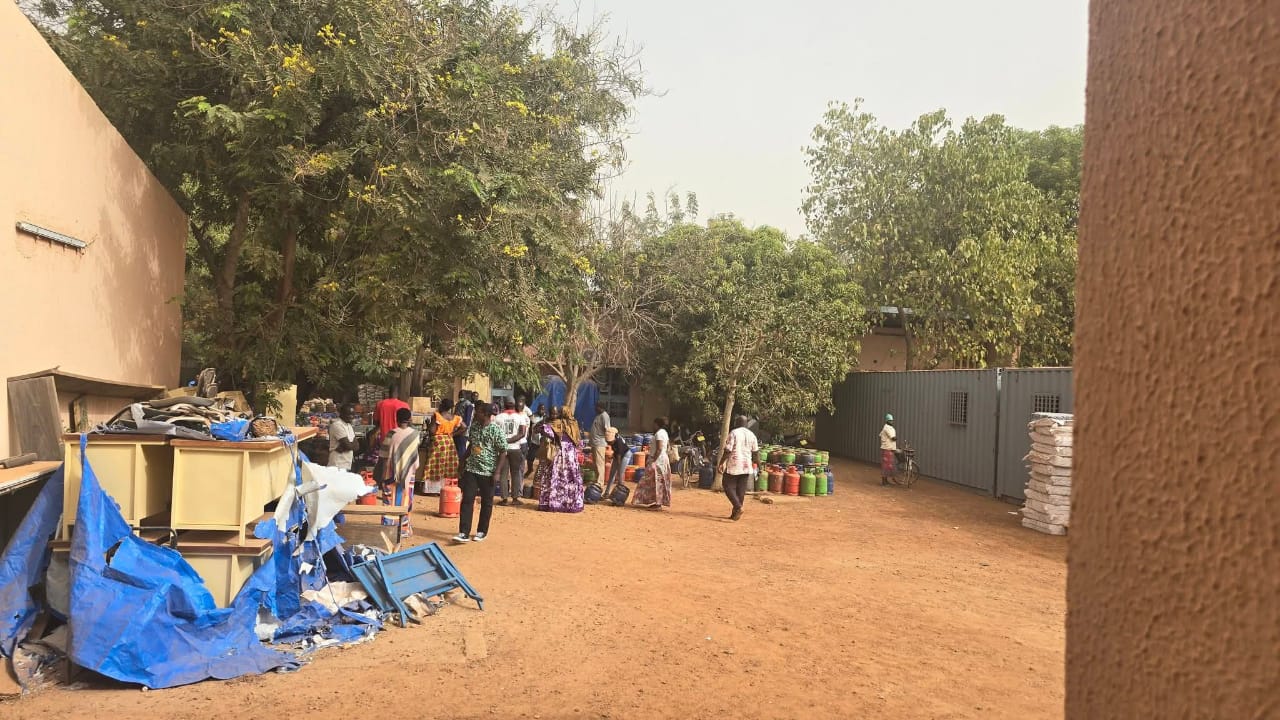
La brigade mobile de contrôle économique et de la répression des fraudes (BMCRF) met en vente des bouteilles de gaz butane saisies pour pratique illicite de prix.
Cette opération se déroule dans ses locaux conformément au communiqué officiel du 13 février 2026.
C'est l'annonce faite sur sa page Facebook ce lundi 16 février 2026. Cette décision est en application, selon elle, des dispositions de l'arrêté n°02-045/MCPEA/SG du 03 juin 2002, fixant les taux des consignes des bouteilles de gaz butane, ces bouteilles vides sont cédées aux prix réglementés suivants :
– 13 500 F CFA pour la bouteille de 6 kg
– 16 500 F CFA pour la bouteille de 12 kg
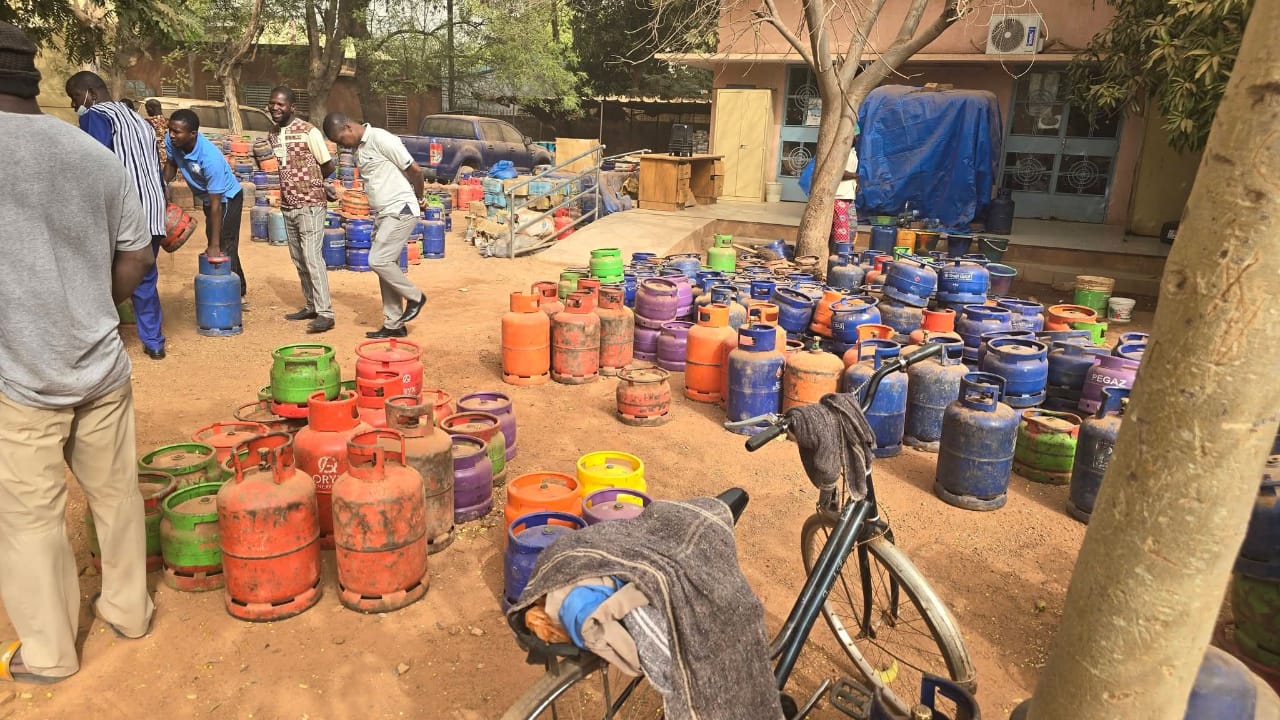
Cette initiative vise à mettre ces bouteilles à la disposition des marketeurs afin de prévenir toute rupture sur le marché et garantir un approvisionnement régulier des ménages.
Ainsi, les ménages qui souhaitent échanger leurs bouteilles vides contre des bouteilles chargées peuvent également se rendre directement dans les locaux de la BMCRF pour effectuer l'opération. Elle rappelle par ailleurs que cette action s'inscrit dans sa mission de lutte contre les pratiques frauduleuses et de protection du consommateur. Tout en garantissant une concurrence saine et loyale.
Pour toute information, veuillez contacter les numéros suivants : 80 00 11 84 /80 00 11 85/ 80 00 11 86
Lefaso.net
Source : SCRP/BMCRF
Categories: Afrique, European Union
FIREPOWER: The view from Munich
Ukraine, Arctiv, destruction
Categories: Biztonságpolitika, European Union
Pages


© 2012-2018 Europa Varietas Foundation © 2015-2018 Europa Varietas Association
www.europavarietas.org | info(@)europavarietas(dot)org | Switzerland


We are looking for sponsors for the English translation of these books, please contact turkeandras(at)gmail(dot)com